
Nestled along the wild west coast of Vancouver Island, British Columbia, Pacific Rim National Park Reserve stands as a testament to nature’s raw power and serene beauty. This iconic park, a jewel in Canada’s national park system, offers an extraordinary array of trails in Pacific Rim National Park Vancouver Island, catering to every level of hiking enthusiast. From leisurely boardwalk strolls through ancient temperate rainforests to multi-day epic treks along a historic coastal route, the park promises profound connections with an ecosystem unlike any other.
The Pacific Rim National Park Reserve is comprised of three distinct units: the Long Beach Unit, the Broken Group Islands, and the West Coast Trail Unit. Each offers unique landscapes and experiences, but it is the extensive network of hiking trails that truly invites exploration into its heart. This guide aims to provide a comprehensive overview, equipping hikers with the knowledge and inspiration to embark on their own unforgettable journey.
Exploring the Diverse Trails in Pacific Rim National Park Vancouver Island
The park’s trails wind through a mosaic of environments, from dense, moss-draped forests to expansive, storm-battered beaches. Understanding the character of each unit helps in planning an adventure that matches one’s aspirations and abilities.
The Long Beach Unit: Gateway to Coastal Wonders
The Long Beach Unit, stretching between the vibrant communities of Tofino and Ucluelet, is the most accessible part of the park and home to a variety of trails that showcase the region’s temperate rainforests and dynamic coastlines. These trails offer glimpses into the rich biodiversity and cultural heritage of the Nuu-chah-nulth First Nations, whose traditional territories encompass this land.
- Rainforest Trail (Loops A & B): Perhaps the most iconic and accessible of the Long Beach trails, the Rainforest Trail consists of two distinct 1-kilometer loops, one on each side of Highway 4. Loop A, located across the highway from the parking lot, emphasizes the forest’s cycles, while Loop B, starting directly from the parking area, focuses on the structure and inhabitants of the forest. Both loops immerse hikers in a world of towering Western Red Cedars, Western Hemlocks, and Sitka Spruce, their branches draped with hanging moss and ferns. The trails are primarily boardwalks, making them relatively easy to navigate, though they do feature numerous stairs that descend into gullies and ascend back up, offering varying perspectives of the forest canopy. It is advisable to check current conditions, as sections, such as Loop B, have occasionally been closed due to weather damage.
- Schooner Cove Trail: This enchanting 2-kilometer (roundtrip) trail, located a short drive south of Tofino, leads hikers through a verdant rainforest on a boardwalk path, descending via a series of wooden steps to the secluded and picturesque Schooner Cove beach. The trail offers a tranquil experience, with the sounds of the ocean gradually growing louder as one approaches the shore. At low tide, the beach reveals tide pools teeming with marine life, inviting careful exploration. Due to the presence of stairs, this trail may not be suitable for individuals with limited mobility or strollers.
- Nuu-chah-nulth Trail: Formerly known as the Wickaninnish Trail, this 2.5-kilometer (one-way) trail offers a profound cultural and natural experience. It connects Florencia Bay to South Beach, winding through ancient forests and offering interpretive signs that share the history and culture of the Nuu-chah-nulth people. The trail provides a glimpse into their guiding principle of Hishuk ish ts’awalk (everything is one) and encourages visitors to explore with iisaak (respect). The path consists of raised wooden boardwalks, with some gentle ascents and descents, leading to viewpoints overlooking Long Beach.
- Willowbrae Trail and Halfmoon Bay Trail: The Willowbrae Trail, a 1.4-kilometer (one-way) gravel path, was historically part of a two-day travel route between Ucluelet and Tofino. It leads through old-growth cedar and hemlock forest. Branching off the Willowbrae Trail, the Halfmoon Bay Trail extends for another 1.8 kilometers (one-way, including Willowbrae Trail), culminating in a steep descent via wooden steps and ramps to the crescent-shaped Halfmoon Bay. This trail is rugged in sections and requires sure-footedness due to steep descents and potential beach logs at the access point.
- Shorepine Bog Trail: This easy 800-meter loop trail offers a unique ecological experience, traversing an old-growth coastal temperate rainforest with a twist. Here, hikers can discover a fascinating bog ecosystem, characterized by stunted shore pines and sphagnum moss, and learn about the unique adaptations of plants, including carnivorous species, to this nutrient-poor environment.
- South Beach Trail: Starting behind the Kwisitis Visitor Centre, this 800-meter (one-way) trail provides dramatic views of the coast, leading to a pebbly beach known for its crashing waves and rolling stones. While offering spectacular wave watching, caution is advised due to very large waves and strong currents, making water activities generally not recommended here.
- Combers Beach Trail: A 500-meter (one-way) trail leading from a parking lot to Combers Beach. Access can be difficult in winter and early spring due to storms and erosion, with steep banks and driftwood piles. It’s important to note that Combers Beach has a seasonal dog ban from April 1 to October 1.
- Radar Hill Trail: A short, accessible trail leading to a panoramic viewpoint, offering expansive vistas of the park’s coastline and surrounding areas.
- Canso Plane Wreck Trail: This easy 4.8-kilometer loop trail leads to the intriguing site of a Canso bomber plane wreck within the forest, offering a unique blend of history and nature.
The West Coast Trail Unit: An Epic Multi-Day Challenge
For the seasoned and well-prepared hiker, the West Coast Trail (WCT) is a legendary 75-kilometer (47-mile) backpacking route that traverses the southwestern edge of Vancouver Island. This challenging trail, typically completed in 6 to 8 days, is not merely a hike but a pilgrimage, originally established as a survival route for shipwrecked mariners along the treacherous “Graveyard of the Pacific.”
The WCT demands significant physical fitness, technical skill, and extensive backcountry experience. Hikers will navigate through dense temperate rainforests, ascend and descend numerous ladders, cross rivers via self-propelled cable cars, and traverse extensive muddy sections. Beach sections, accessible only at specific tide levels, offer stunning coastal scenery, including sea stacks, tide pools, sea caves, and waterfalls. The trail is open seasonally from May 1 to September 30, with reservations being essential and often selling out quickly. All hikers must attend a mandatory orientation session before starting, covering route hazards, tides, emergency procedures, and wildlife.
Broken Group Islands: Primarily a Paddler’s Paradise
While primarily renowned as a world-class sea kayaking destination, the Broken Group Islands unit, an archipelago of over 100 small islands in Barkley Sound, also offers limited opportunities for short walks and exploration on some of its designated camping islands. Backcountry camping permits are required for overnight stays in this remote and wild area.
Practical Preparation for Trails in Pacific Rim National Park Vancouver Island
A successful and enjoyable hiking experience in Pacific Rim National Park Reserve hinges on thorough preparation. The west coast climate is famously unpredictable, and conditions can change rapidly.
Essential Gear and Clothing
- Layered, Waterproof Clothing: Even in summer, rain is common. High-quality waterproof and windproof outer layers are crucial, along with moisture-wicking base layers and insulating mid-layers.
- Sturdy, Waterproof Footwear: Trails can be wet, muddy, and feature uneven terrain. Waterproof hiking boots with good ankle support and grip are indispensable.
- Navigation Tools: A map and compass, or a reliable GPS device/app, are recommended, especially for longer or less-trafficked trails. While many Long Beach trails are well-marked, conditions can obscure signage.
- First-Aid Kit: A comprehensive kit for blisters, minor injuries, and any personal medications is vital.
- Water and Snacks: Always carry more water than you think you’ll need. Streams and rivers in the area are not safe for drinking without proper filtration. High-energy snacks are essential to maintain energy levels.
- Bear Spray: Wildlife encounters, particularly with black bears, are possible. Carry bear spray and know how to use it.
- Tide Tables: For any beach hiking, especially on the West Coast Trail or even shorter beach access trails, knowing the tide schedule is critical to avoid being cut off by rising waters.
Permits and Passes
All visitors to Pacific Rim National Park Reserve are required to possess a valid National Park Entry Pass. These can be purchased for daily or annual use at parking lot machines or visitor centers. For the West Coast Trail, a specific Backcountry Use Permit, a reservation, and ferry fees are required, in addition to the park entry pass. Reservations for the WCT open in January for the upcoming season and are highly competitive.
Best Time to Hike
The prime hiking season for most trails in Pacific Rim National Park Vancouver Island, particularly the West Coast Trail and for exploring the Broken Group Islands, is from May to September, when the weather is generally warmer and drier. May offers ideal conditions for trails like the Nuu-chah-nulth Trail, with fewer crowds and lush spring foliage. However, the shoulder seasons (April-May and October) can offer unique experiences, such as blooming wildflowers or dramatic storm watching, though hikers should be prepared for cooler, wetter conditions.
You might also enjoy: Conquer the Coastal Majesty: Your Guide to Hiking Cinque Terre Italy Coastal Trails
Navigating the Wild: Safety and Awareness
The rugged beauty of Pacific Rim National Park comes with inherent risks. Responsible hiking means prioritizing safety and being prepared for the unexpected.
Tidal Safety and Ocean Hazards
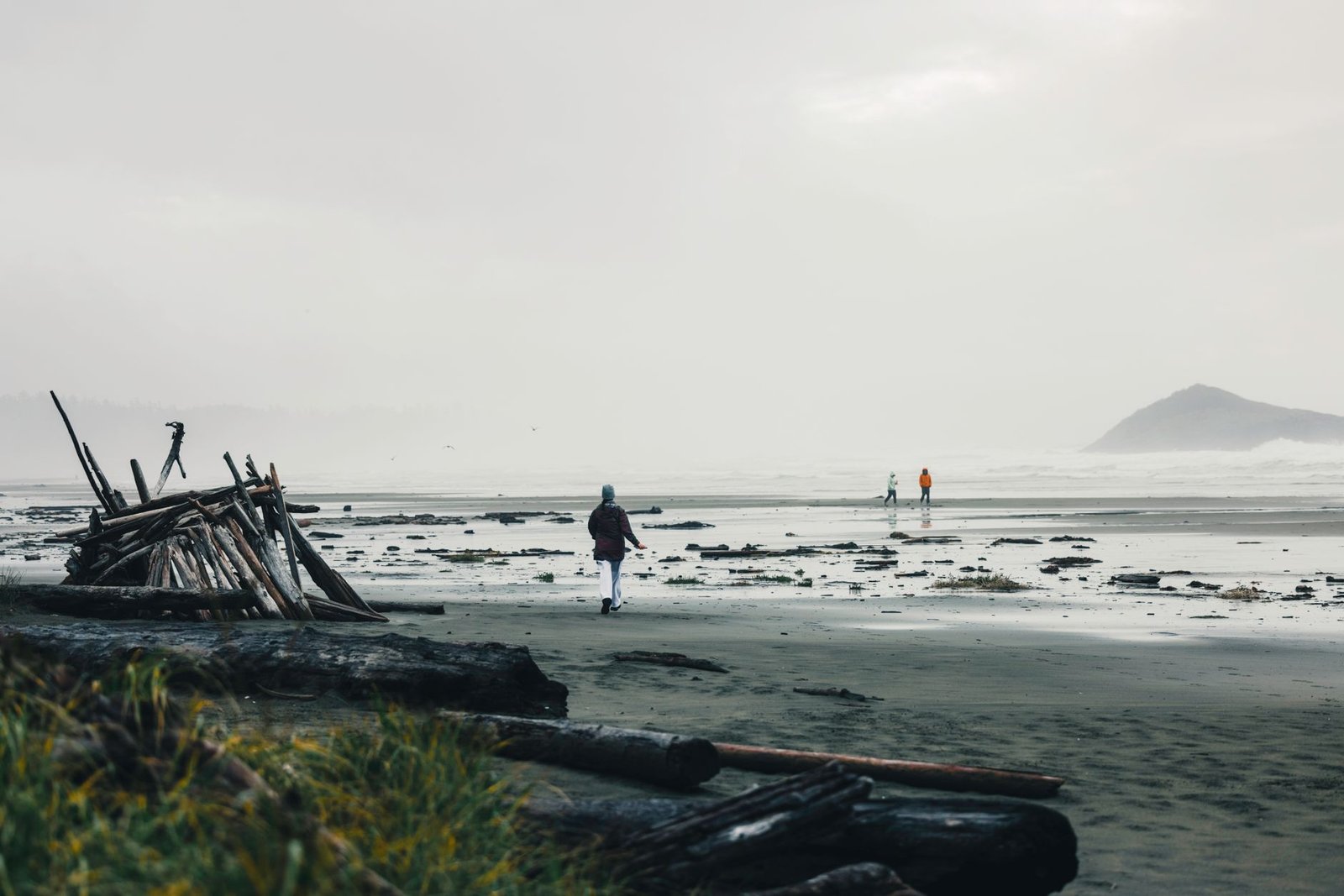
The Pacific Ocean is powerful and unpredictable. When hiking along beaches or coastal sections, always consult tide tables and be acutely aware of rising tides and potential rogue waves. Never turn your back on the ocean, especially during storms, as waves can reach surprising heights and sweep logs or people into the water. Some creeks in the Long Beach Unit can become impassable at high tide or after heavy rain.
Wildlife Encounters
The park is home to a variety of wildlife, including black bears, wolves, and cougars. Hikers should make noise while on trails, especially in dense forest, to avoid surprising animals. Traveling in groups can also reduce the risk of encounters. If an encounter occurs, remain calm, give the animal space, and back away slowly without running. Proper food storage is essential to prevent attracting wildlife to campsites and trails.
Weather Preparedness and Hypothermia
Weather conditions can shift rapidly, bringing sudden rain, wind, or fog. Hypothermia is a significant risk, even in summer, due to cold ocean temperatures (7°C to 14°C). Dress in layers, carry waterproof gear, and know the signs of hypothermia. Always assess changing conditions and adjust plans accordingly.
Emergency Procedures
Before heading out, inform someone of your itinerary and expected return time. Carry a fully charged cell phone, though service can be unreliable in many areas of the park. In case of an emergency, contact Parks Canada Dispatch at 1-877-852-3100 or 250-726-3604.
Environmental Stewardship and Respectful Hiking
As visitors to this pristine environment and the traditional territories of the Nuu-chah-nulth First Nations, we carry a responsibility to minimize our impact and respect the land.
Leave No Trace Principles
Adhering to the seven Leave No Trace principles is paramount:
- Plan Ahead and Prepare: Research your destination, pack appropriately, and know regulations.
- Travel and Camp on Durable Surfaces: Stay on marked trails to protect fragile ecosystems.
- Dispose of Waste Properly: Pack out everything you pack in, including all garbage. Use designated wildlife-proof bins.
- Leave What You Find: Do not disturb natural or cultural artifacts. Take only photographs.
- Minimize Campfire Impacts: Use established fire rings and check for fire bans.
- Respect Wildlife: Observe from a distance, never feed animals, and keep pets on a leash.
- Be Considerate of Other Visitors: Share the trails and maintain a respectful quiet.
Indigenous Guiding Principles
The Nuu-chah-nulth people have lived along this coast for millennia, and their deep connection to the land is expressed through guiding principles such as Hishuk ish ts’awalk (everything is one), iisaak (respect), and uu-a-thluk (taking care of). By visiting with respect, we honor their heritage and contribute to the long-term conservation of this special place. This includes respecting all signage and only hiking on authorized trails.
You might also enjoy: Glacier’s Grandeur: An Essential Guide to Hiking Trails in Montana’s Crown Jewel
Dog Regulations
Dogs are permitted in the Long Beach area but must be on a leash and under physical control at all times, including on beaches, trails, parking lots, and in the water. However, a seasonal dog ban is in effect for Combers Beach from April 1 to October 1 to protect shorebirds and wildlife.

Personal Insights from the Trail
As experienced hikers, we have walked many paths, but the trails in Pacific Rim National Park Vancouver Island hold a unique allure. There’s a profound sense of stepping into a living, breathing cathedral when traversing the Rainforest Trail, with ancient trees reaching skyward, their trunks adorned with vibrant mosses and ferns. The air, thick with the scent of damp earth and salt, invigorates the senses, and the muted sounds of the highway quickly give way to the symphony of the forest – the drip of water, the rustle of unseen creatures, the distant roar of the Pacific.
The journey to Schooner Cove, with its boardwalk winding through the dense canopy, feels like a descent into a hidden world, culminating in the breathtaking reveal of the secluded beach. It’s a place where one can truly feel the immense power of the ocean, watching waves crash against the shore and exploring the intricate ecosystems of tide pools. The interpretive signs along the Nuu-chah-nulth Trail offer a humbling perspective, reminding us that we are guests on land cared for by Indigenous peoples for thousands of years, fostering a deeper appreciation for the interconnectedness of nature and culture.
For those who undertake the West Coast Trail, the experience is transformative. It is a crucible of challenge and reward, where every muddy step, every ladder climbed, and every tidal crossing overcome builds a profound sense of accomplishment. The raw beauty of the coastline, the ancient forests, and the sheer isolation create an immersive wilderness experience that stays with you long after the journey ends. It is a reminder of human resilience and the enduring majesty of the natural world.
Conclusion
The trails in Pacific Rim National Park Vancouver Island offer an unparalleled opportunity to connect with one of Canada’s most spectacular coastal environments. Whether seeking a peaceful stroll through an ancient forest or a demanding multi-day trek, the park provides a diverse range of experiences that inspire awe and foster a deep appreciation for nature. By preparing diligently, prioritizing safety, and embracing the principles of environmental stewardship and cultural respect, every hiker can contribute to preserving this extraordinary wilderness for generations to come. Lace up your boots, pack your sense of adventure, and answer the call of the wild Pacific Rim.
Frequently Asked Questions
What are the must-do trails in Pacific Rim National Park Vancouver Island for a first-time visitor?
For first-time visitors, the Rainforest Trail (Loops A & B) offers an accessible and immersive experience into the ancient temperate rainforest. The Schooner Cove Trail provides a beautiful walk through the forest leading to a secluded beach. For a blend of nature and culture, the Nuu-chah-nulth Trail is highly recommended.
Do I need a permit to hike in Pacific Rim National Park Reserve?
Yes, all visitors to Pacific Rim National Park Reserve are required to have a valid National Park Entry Pass. For multi-day hikes like the West Coast Trail, additional specific Backcountry Use Permits, reservations, and orientation sessions are mandatory. Backcountry camping in the Broken Group Islands also requires permits.
What are the main safety considerations when hiking coastal trails in Pacific Rim National Park?
Key safety considerations include checking tide tables to avoid being stranded by rising waters, being aware of unpredictable rogue waves, and never turning your back on the ocean. Hikers should also be prepared for rapid weather changes, carry appropriate gear to prevent hypothermia, and be aware of wildlife, such as bears, carrying bear spray if necessary.
When is the best time of year to hike the trails in Pacific Rim National Park Vancouver Island?
The best time for hiking in Pacific Rim National Park Reserve is generally from May to September, when the weather is milder and drier. This period is optimal for all trails, including the West Coast Trail and for exploring the Broken Group Islands. Shoulder seasons (April-May, October) can offer fewer crowds and unique experiences like storm watching, but require preparedness for wetter conditions.
Related Adventures
- Conquer the Coastal Majesty: Your Guide to Hiking Cinque Terre Italy Coastal Trails
- Glacier’s Grandeur: An Essential Guide to Hiking Trails in Montana’s Crown Jewel
- Picos de Europa: A Hiker’s Ultimate Guide to Spain’s Majestic Mountain Trails
⚠️ Safety Notice: This content is for informational purposes only. Always consult local guides and operators, verify current conditions, and ensure appropriate skills and certifications before any outdoor activity. DiveBikeHike is not responsible for injuries or incidents.